

What is the best brush for curly hair when aiming to reduce frizz and breakage?
Curly hair seldom requires extra force. It actually needs proper timing and adequate slip. You must use a brush that honors the natural shape of every single curl. If an incorrect tool grabs onto dry bends, it might lift the hair cuticle. This action stretches the strand. It can then change a tiny knot into serious frizz or cause actual breakage. That explains why the best brush for curly hair is not just the softest item available. It is certainly not always the most costly option either. Instead, it is the specific tool that fits your unique curl pattern. It should also match your current moisture level and your daily styling goal.
Recent talks about curl-care have shifted toward scalp-first routines. People also focus on low-heat styling and much softer detangling methods. These ongoing changes suggest a very practical answer. You should pick a brush that lowers overall tension. Use this tool on damp or well-conditioned hair. Furthermore, you need to make your brushing technique just as careful as the tool itself.
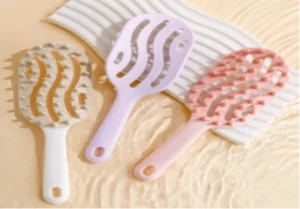
What makes the best brush for curly hair?
Before you select a brush, observe what truly occurs during the detangling process. Curved strands naturally form more spots where hair can easily catch. Thick curls also tend to hide stubborn knots. Meanwhile, dry hair possesses much less flexibility. A proper tool ought to help the hair divide slowly. It must never rip an entire section apart all at once. The following traits prove highly beneficial for individuals. They are great for people who desire smoother curls with far less mechanical stress.
Flexible teeth and a gentle cushion
Flexible teeth can easily bend around a knot. They do this rather than pushing harshly through it. A cushioned base provides another level of comfort. It allows the brush to yield slightly whenever it encounters tough resistance. This feature matters greatly for thick, long, or tightly coiled hair. In those cases, a stiff brush might produce painful pressure right at the roots.
An air cushion brush serves as a handy daily choice. It works well for light detangling tasks, basic scalp comfort, and final finishing touches. You should search for rounded tips. Also, look for a cushion that bounces back to its original shape. The main objective is not to brush your hair faster. The true aim is to distribute tension across a wider area. This keeps every single stroke perfectly controlled.
Wide spacing for curls that need room
Bristles placed too closely together can break apart curl clumps far too harshly. Wider spacing grants textured hair extra room to shift around. This design significantly helps to cut down on painful snagging. A smoothing comb featuring nicely finished teeth often proves quite helpful. You can use it for spreading conditioner evenly. It also works for shaping sections or smoothing the outer layer once the main knots are completely gone.
For very dense curls, begin the process with your fingers. Alternatively, start with a simple wide-tooth comb. After that, employ a brush only when the hair section is already partially divided. This simple two-step method generally causes much less pulling. It works better than expecting just one tool to eliminate every single knot.
Materials and finish matter
Smooth, rounded plastic teeth remain much kinder to the hair cuticle. They are better than sharp or poorly finished edges. A sturdy, properly molded body also assists the brush in holding its shape over a long time. When you compare different brushes, examine the gaps between the teeth. Check the overall flexibility of the pins. Finally, see whether the handle remains firm and secure when it gets wet.
SUDICOMB creates reliable hair-care tools across multiple categories. These include the daily comb, cushion brush, shampoo brush, and dressing mirror lines. We concentrate on highly practical shapes and smooth finishing. We also offer customizable solutions for clients who require steady quality on a large scale. Please explore our hair-care product collection. There, you can compare various styles meant for different daily routines. For a targeted wet-care choice, kindly review the brosse à shampoing 140 product page.
Which brush suits different curl-care moments?
There is absolutely no single brush meant for every possible task. A tool that feels nice in the shower might not act as the finest option for dry styling. Likewise, a brush built for scalp massage might fail to define curl clumps properly. Pairing the right tool with the correct moment makes the whole routine much calmer. This careful matching also helps shield the hair from constant, repeated tension.
For wet detangling: use slip and small sections
Wet or damp hair coated with conditioner normally proves simpler to separate. This happens because the wet strands gain more flexibility. Also, the hair surface holds much more slip. You should split the hair into four to eight smaller sections. The exact number depends on your hair density. Always work from the ends moving upward. Make sure to pause anytime the brush faces hard resistance.
A proper detangling brush for curly hair ought to glide through the section. It should use a steady, very light pressure. You must never drag it from the roots down to the ends in one single sweep. Doing that forces every knot further down. It drastically raises the force needed at the very tips of the hair.
For normal shower routines, a comb for shampoo or a standard shampoo brush can assist you. They help to spread the cleanser and gently massage the scalp. You should apply light circular motions directly at the roots. After that, rinse the hair thoroughly. A shampoo brush is meant to aid the cleansing process. It must never scratch the skin or pull roughly through the hair lengths. SUDICOMB’s shampoo brush range clearly demonstrates this concept. It shows how specialized wash-day tools can easily support a very gentle detangling routine.
For curl definition: keep the pattern intact
If your goal is defined curls, apply leave-in conditioner or styling cream while the hair is wet. Use a flexible brush on a small section, guide the hair in its natural direction, and then scrunch. Stop when the curls have formed. Repeated brushing can separate clumps and create a fuzzy surface.
For fine waves, a few passes with a smoothing comb may be enough. For thicker curls, a cushioned brush can help shape larger sections after detangling. The right amount of brushing is the minimum needed to create the finish you want.
For dry-day refreshes: avoid starting with a full brush-out
Dry curls are more likely to lose definition when brushed from root to tip. Instead, mist the area lightly, smooth a small amount of leave-in product over the hands, and separate only the sections that need attention. A wide-tooth comb or fingers can often refresh the roots without disturbing the entire style.
A scalp massage brush can be used separately from detangling. Gentle pressure may make a wash-day routine feel more comfortable, but it should never be used to force through knots. On dry hair, keep the movement slow and localized.
How to brush curly hair with less frizz and breakage
Technique decides whether a good brush performs well. Even a flexible tool can cause damage when the hair is pulled quickly or when large, tangled sections are treated as one piece. Build a repeatable routine that gives the hair time to respond, especially after washing, swimming, or sleeping on loose curls.
A simple wash-day method
- Wet your hair completely. Then, put on plenty of conditioner to make it slippery.
- Pull the strands apart using your fingers. Do this before you grab a brush.
- Split your hair into smaller parts. Use clips to hold the extra pieces out of the way.
- Begin near the tips. After that, work your way up a few centimeters at a time.
- Grip the hair right above any tangles. This stops your roots from taking all the pulling force.
- Wash out the conditioner. Next, add your styling products. Squeeze the hair gently rather than brushing it over and over.
This routine requires some extra time. However, it lowers the hard tugging that usually breaks your ends. Make sure to wash your brush often, too. Leftover products and loose strands can cause the bristles to pull harder than normal.
Signs your tool or technique needs to change
Notice how things look and feel while you brush. You might feel constant pain or a harsh scraping feeling. You could also see lots of broken pieces or notice much more frizz. These are clear signs to stop and check your brush. Sometimes, strands stretch way too far before bouncing back. This means they likely need extra water and much less pulling.
Pick a brush that has a firm handle and smooth, rounded bristles. It must also bend just enough for your specific hair type. A brush might fold too quickly. If so, it will struggle to manage thick locks. On the other hand, a very stiff brush can cause too much stress. The ideal brush for curly hair offers good control. It should never feel rough or damaging.
How SUDICOMB supports modern curl-care product lines
People now care more about scalp health and safe detangling. They also want tools that work for multiple steps. This shift changes what shoppers want from hair accessories. Stores and beauty brands need items that feel nice to use. These items must look unique. They also need to work well in both wet and dry conditions. This demand covers air cushion brush models and scalp cushion structures. It also includes shampoo brushes and smoothing combs. All of these can be made for various types of customers.
SUDICOMB operates as a top-level massage comb manufacturer. We fully support OEM massage comb projects. This covers the item shape, color, boxes, and technical details. Our workflow starts with your specific needs and design ideas. Next, we provide a price quote and make samples. We also run strict production quality control before we ship anything. Some brands want to build a custom product line. If so, please view our processus de commande. You can also visit the SUDICOMB homepage. There, you will find more details about our factory skills.
Img.SUDICOMB OEM Shampoo and Massage Brush Collection.webp
Conclusion
The best brush for curly hair is the one that fits both your hair and your habits. For most people, that means flexible teeth, rounded tips, a comfortable cushion, and enough space for curls to move without being forced apart. Use the tool on damp, conditioned hair, divide the hair into small sections, and work from the ends upward. A brush cannot replace moisture or patience, but it can make both easier to use. As curl care continues to focus on scalp comfort, lower heat, and reduced friction, thoughtful brush design matters more than ever. Choose a tool that supports your natural pattern, then let your curls do the rest.
FAQ
Q : Quelle est la meilleure brosse pour les cheveux bouclés ?
A: A flexible, cushioned brush used on damp, conditioned hair is a strong choice for most curls.
Q : Is an air cushion brush good for frizzy curly hair?
A: Yes, it can reduce pulling when used gently, especially during light detangling and scalp care.
Q : Should I use a shampoo brush on curly hair?
A: Yes. Use it on the scalp with light pressure, and avoid dragging it through tangled lengths.
Précédent : What Features Make a Men’s Comb Ideal for Daily Grooming?
Suivant : Is a blow dryer brush better than traditional styling brushes for fast blowouts?


